
1.30pm – 3.30pm, with Book Launch at 4pm
VENUE: Parramatta Female Factory Precinct
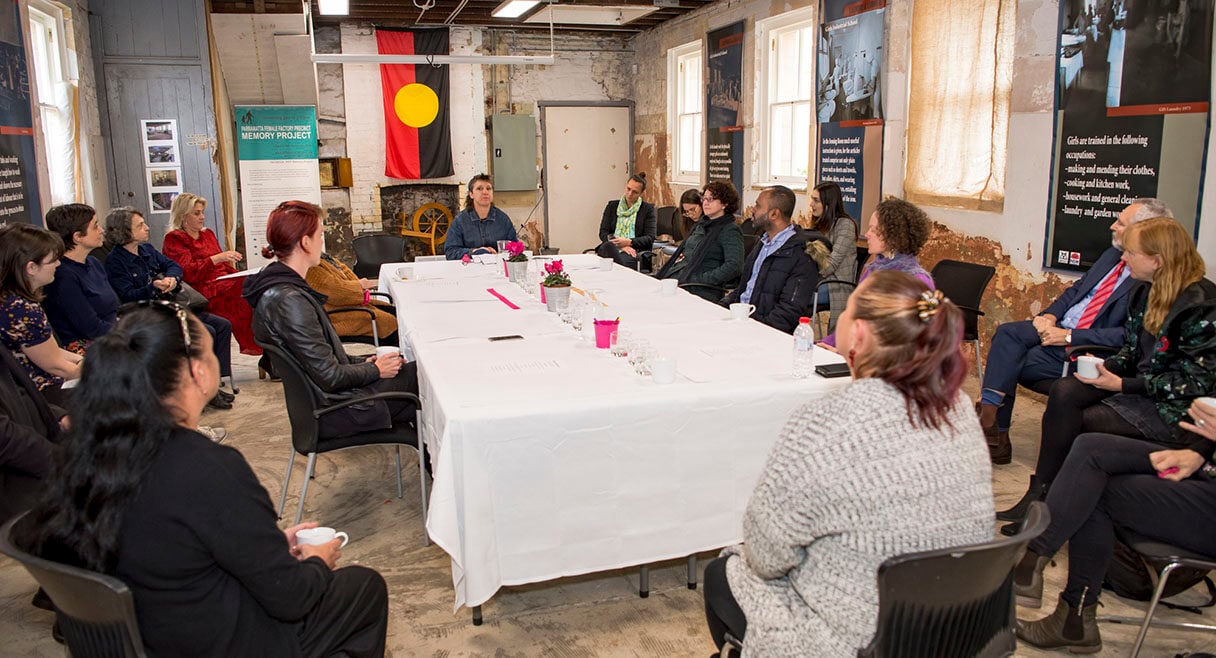
Parragirls return to host a ‘Long Table’ celebration of female survivors, political and community leaders, and activists who speak truth to power.
Unlocking memories of institutional ‘care’ at Parramatta Girls Home, the exhibition created by Parragirls – a self-funded voluntary group providing support to former residents and their families – was a deeply-moving success of The Big Anxiety 2017. Now Parragirls are back in 2019 to host Long Table: Women in Power, in a potent discussion facilitated by Karen Therese.
The Long Table creates a democratic forum for public discussion, in a creative response to conventional hierarchies of ‘expert panels’ and ‘audience questions’. It encourages free movement between speaking and observing, as anyone is welcome to take a seat at the table and share their perspective and offer their perspectives on Women in Power.
This event is a partnership between Parramatta Female Factory and PYT—Powerhouse Youth Theatre, Fairfield, who have joined together to create the new National Centre for Women at the Parramatta Female Factory Precinct.
After the Long Table, the Parragirls will launch their new book, PARRAGIRLS: Reimagining Parramatta Girls Home through Art and Memory, edited by Lily Hibberd with Bonney Djuric OAM, published by NewSouth Books.
Lily Hibberd is the recipient of an Australian Research Council Discovery Early Career Researcher Award Scheme (project number DE160100142).
Dr Lily Hibberd
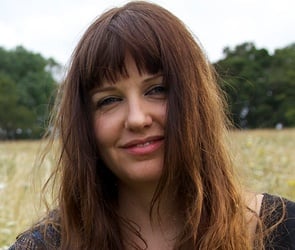
Lily Hibberd is an Australian artist and writer based in Paris. Her interdisciplinary practice examines perceptions of memory, time and light through combinations of
performance, writing, painting, photography, video and installation art. Lily’s projects are developed in long-term research and unique collaboration with isolated or
marginalised communities, as well as artists, scientists and historians. She is Creative Director and co-founder with Bonney Djuric of Parramatta Female Factory
Precinct Memory Project. Together they have developed and facilitated creative projects with former residents of Parramatta Girls Home.
Bonney Djuric (OAM)
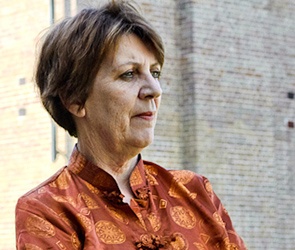
Bonney Djuric (OAM) is an artist, activist, historian, author and adjunct lecturer at NIEA, UNSW. Djuric works across painting, new media technologies, installation and
textiles and has realised many individual and collaborative creative works pertaining to the Parramatta Girls Home and Precinct for Parramatta Female Factory Memory
Project. She secured the heritage status of the PFFP site and in 2017 she was awarded and OAM for this work.
Brianna Munting
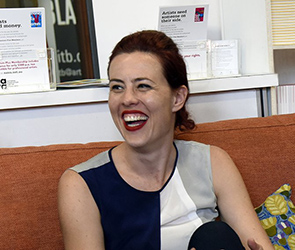
Brianna Munting is the Executive Director of the National Women’s Arts and Cultural Centre. She is a curator, policy thinker and arts advocate. Her practice has always
focused on people and places that can inspire and create social change. She has worked as a curator/arts manager having held roles as Deputy Director at the National Association for the Visual Arts, Cultural Projects Coordinator City of Sydney, and curator for Casula Powerhouse and 4a Centre for Contemporary Asian Art.
The Long Table is based on a format developed by Lois Weaver (who writes about it in our book, The Big Anxiety: Taking Care of Mental Health in Times of Crisis). Introduced by Lois in our 2017 festival, the Long Table has since been used in The Big Anxiety for lived experience-led discussions of feelings associated with trauma and suicide.
A Long Table is set up like a dinner table with an ‘etiquette’ formulated by Lois [see HERE]. People participating may choose to sit on the sidelines and listen to the conversation or join the table at any time. There is no pressure to speak or not speak — but guests must come to the table to talk. The aim of this format is to create a non-hierarchical, inclusive space for conversation.
It is not about control or achieving a specific outcome but holding a space of deep listening and respect for others and their opinions and experiences – whether they align with your own or not. Participants speak one at a time, coming to the table to share thoughts with the table — and may join or leave the table at any time. Participants respect the privacy of what is said in the room.
Experiencing strong emotions is natural and healthy. We ask only that you do not hurt yourself, others or the environment – and ensure respectful communication. Being ‘triggered’ or feeling various degrees of reaction is to be expected when people become conscious of trauma held and emerging from within. Participants are welcome to leave the room if necessary to process their reactions privately, before returning.
Trauma-informed counsellors are present and available on request. Massage is available in the room, during the Long Table. In our Melbourne Forum, this is provided by trauma informed, Shiatsu practitioner Dr Leela Klein. The retreat rooms are open throughout the event. Decompression activities will be offered following the Long Table.
In accordance with The Big Anxiety’s ‘Don’t rush home’ policy – we encourage anyone with feelings of distress to make contact, share feelings or talk to us before leaving. Participants are encouraged to talk to the host(s) and/or counsellors about support needs.
There is no moderator in a Long Table—and no rules about what is discussed. It is a lived-experienced-led community discussion rather than a clinician-led process. Whilst many people report finding this a warm and supportive environment, we encourage participants to reflect on whether they are in the right frame of mind to listen to stories of pain and distress, and to talk to event hosts in advance if in doubt.
Our trauma-informed approach is inspired by and aligns with principles of peer support and the generational orientation of other consumer-led approaches to discussion of trauma and suicide, such as Alternatives to Suicide https://alt2su-nsw.net/ and Suicide Narratives by Humane Clinic.
Australian Human Rights Institute Associate Rebecca Moran and Scientia Professor Jill Bennett discuss The Long Table in Human Rights Defender, the newsletter from The Australian Human Rights Institute. HERE